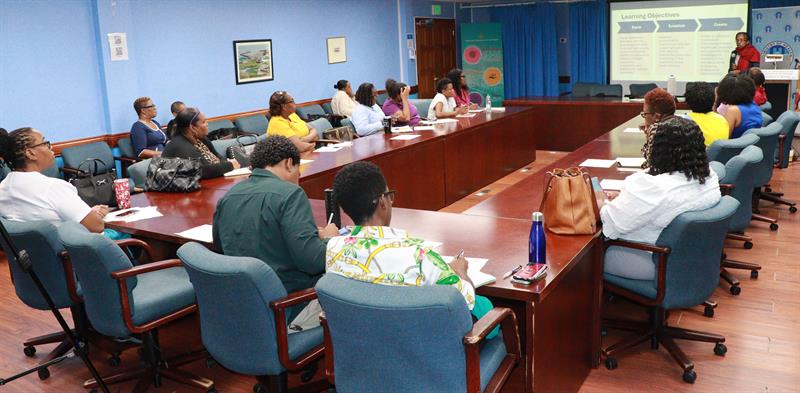
 A significant step towards strengthening adolescent healthcare in Saint Lucia unfolded on Wednesday December 10, 2025 as the Ministry of Health, Wellness and Elderly Affairs, in collaboration with several key development partners, launched a national training initiative for healthcare providers. The session brought together a wide cross-section of medical professionals who are committed to improving service delivery for the nation’s youth. The training session took place at the Ministry of Infrastructure’s Conference Room in Union.
The training focused on the implementation of National Standards for Quality Healthcare Services for Adolescents, a crucial framework designed to ensure that young people across the island receive care that is safe, confidential, evidence-based, and responsive to their unique needs.
The training sessions were hosted in collaboration with UN Women, the United Nations Population Fund (UNFPA), and the Build Back Equal Project.
Ogwuche Odo, the Sexual Reproductive Health/ Reproductive Health Commodity Security Specialist with the UNFPA, says the newly adopted standards in the framework ensures that adolescents receive consistent, rights-based, and developmentally appropriate care. “The Ministry has rightly emphasized the importance of improving adolescent access to health services as the country moves steadily towards Universal Health Coverage. So these standards represent a practical and strategic step forward in ensuring that adolescents receive the quality care that they need and deserve. It is also worth noting that the Ministry of Health has established the SRE Technical Working Group to strengthen the coordination of sexually reproductive health interventions across the island. This kind of leadership is critical to ensuring that the standards are not only adopted but effectively implemented. The standards are built on a strong framework that aims to ensure care is consistent, right-based and appropriate to the developmental needs of adolescents.”
Dr. Tonia Frame, a consultant with the United Nations Population Fund (UNFPA), explained that the standards are aligned with the World Health Organization’s Quality Standards for Adolescent Health Care Services and cover a wide range of health services tailored specifically to the needs of young people. “There are eight standards. And they're really looking at the first standard, for example, is around health literacy, adolescent health literacy, ensuring that adolescents have adequate knowledge and information, know where to go to access services. They can understand
the information that is shared with them. But a big part of this training is ensuring that providers have the competence to engage adolescents in a way that is age appropriate, but also culturally appropriate. I know that's a difficult kind of concept to marry. But yes, it does have to be culturally appropriate in terms of the laws of St. Lucia and so forth.”
Sexual and Reproductive Health Nurse at the Vieux Fort Wellness Centre, Junette Joseph believes the training directly addresses long-standing gaps in accessibility and inclusiveness of adolescents within the current system. “This training is important because our adolescents have been sidelined a bit or neglected for lack of a better word in the services that we provided, so although the services are available they’re not accessible by them and also this training will help guide our policies to change, to include them to become more inclusive and to help us provide better care for the adolescents.”
The training initiative also supports the Ministry’s broader goals of reducing barriers to care, promoting healthier lifestyles, and fostering a supportive healthcare system for future generations.